Wednesday, April 11, 2012

Got Schmaltz?

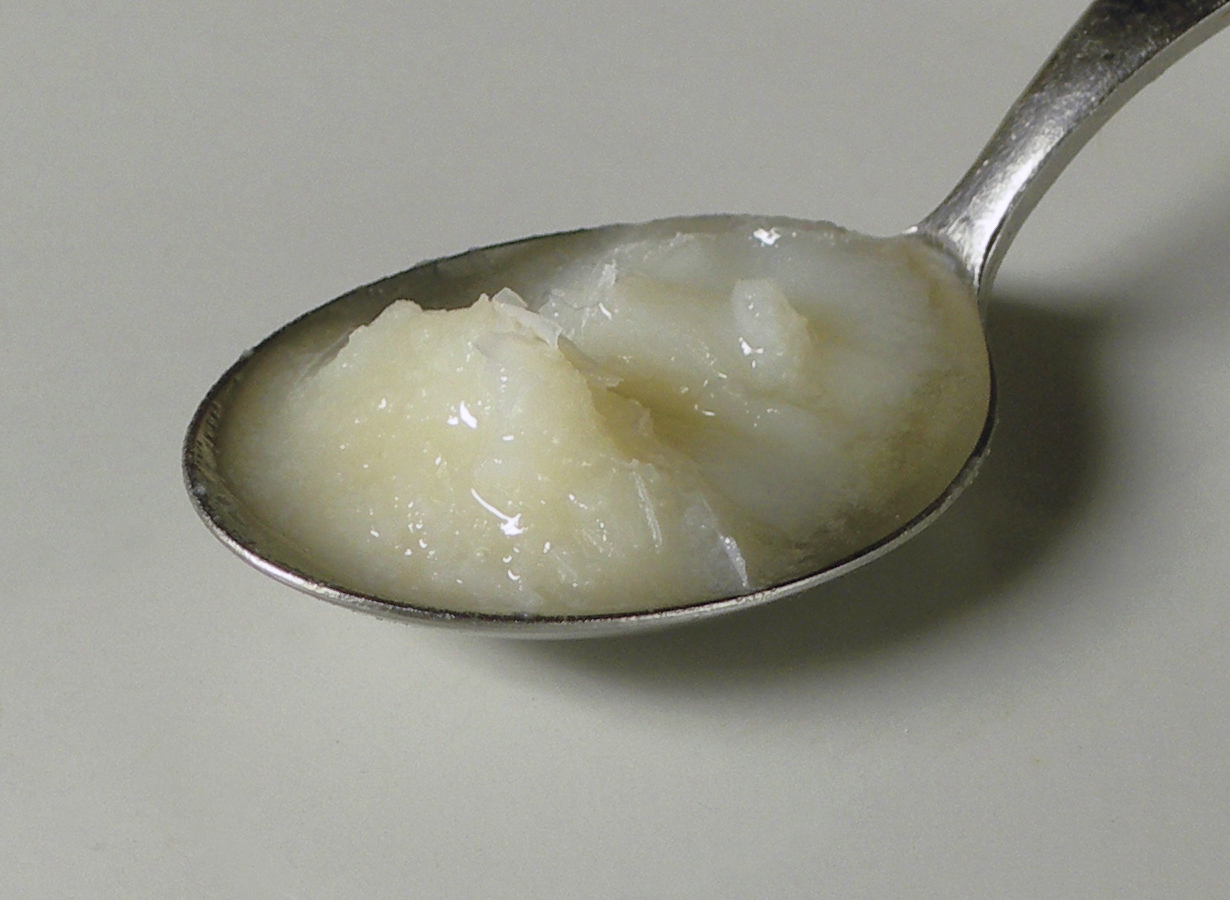
(Photo courtesy of Wikipedia)
The theme of this week’s kitchen dispatch is Schmaltz. Yes schmaltz. As in chicken fat; as in gribenes’ sleeker partner; as in the not-so-secret ingredient in Bubbie’s matzah ball soup. But also as in schmaltzy: as in over-the-top sappy and saccharine; as in candle-lit images of Mottel and Tzeitl’s wedding in Fiddler on the Roof; as in sun-kissed smiling children linking arms to sing “We are the World” on a pristine mountaintop. Brace yourself.

Most of the universe is aware by now that Passover is upon us. This means that Jews worldwide are turning their attention to all things schmaltz(y). It begins with the matzah ball soup that is traditionally served as the first course at the Passover seder. When done right, the chicken soup will have been made with a nice fatty whole chicken, adding a deep, oily flavor to the broth. After the broth is refrigerated, most of this fat will float to the top of the pot. Once skimmed, the fat becomes the liquid gold that can be used in place of almost any oil to elevate the flavor and fat content of matzah balls, potato kugel, toast and a number of other stick-to-your-thighs dishes. Here’s a blog showing another way to render chicken fat into schmaltz.

As for the chicken broth itself, some people also add dill or other fancy ingredients to intensify its richness. This can be a nice touch, but I contend that as long as you’ve got a little schmaltz and a lot of salt, you’ve got a great soup. And a great matzah ball to go in it. (Note that I am not providing specific recipes here, because I'm assuming that if you understood the title of this entry, you have some clue about where you could score a good Jewish recipe or two. If not, I'll hook you up with the family elders.)

Of course matzah ball soup is not strictly a Passover thing. Jewish mothers (including me) will find any excuse to make matzah ball soup:
  • Got a sniffle? Let’s make soup to clear you up.
  • Yes, it’s 90 degrees outside, but winter’s only 4 months away! Let’s make soup to stock the freezer.
  • Chaim Topol is still alive? Let’s make soup to celebrate!
Still, matzah ball soup remains a critical component of the Ashkenazi seder, and it’s ability to survive through the ages is a testament to the persistent heavy-duty kick of real chicken schmaltz.

Schmaltzy, by contrast, is the inevitable emotional reaction one gets from the telling of the Passover story to the younger generation. If you are lucky enough to attend a seder with small children who’ve just learned to read, I dare you not to get misty-eyed as the youngest child present stumbles his or her way through the traditional four questions. 


At our meal, this meant the Pie Guy was the child of honor. He is, let’s just submit it for the official record, the most adorable child ever to read from a Haggadah. He had his few minutes in the seder sun this week, and I couldn’t have been prouder. 

And the Bean, well, not only can she tell you the full story of the Jews’ exodus from Egypt, but she can tell you all about those pesky Egyptians’ daily lives too. She is the family expert on all things ancient. The Greco-Roman empires are alive and well and acting out their epic battles in her little noggin. The Bean was so pleased with her knowledge, in fact, that she wrangled her (public school) teacher into letting her read and perform the Passover story for her third-grade class.

The week was full of schmaltzy moments: First the kids made afikomen bags, one of which featured a comic strip retelling of the exodus story and a heated bubble dialogue between Moses and Pharoah. Then they enacted the plagues for their friends by hopping around the kitchen like frogs. (When did frogs become cute?)  

Just when we were starting to have fun, there was the spontaneous tearful discussion about the lessons of Anne Frank and the holocaust (at nearly 9 years old, the Bean had never heard of either). It’s intense. The holidays are pretty much designed to take parents on a treacherous journey of emotional extremes.

I found my eyes welling up every time I even glanced at the Bean or the Pie Guy in the days leading up to the seder. How did I get to be so lucky, that I should be blessed with not one, but two beautiful, kind, clever, and fun children? Children who are now old enough to take on the responsibility of re-telling this fascinating part of their history? Children who can recite the Hebrew blessings over the wine, the candles and the matzah? Children who I can count on to actually remain seated at the table (not under it) for the duration of the service? These are miracles indeed.

As at all major holidays, we were surrounded by family, both literally and figuratively. The Hebrew phrase “L’Dor’ Vador” (from Generation to Generation) was constantly with me: when I set the table with my grandmother’s china; as I soaked the matzah for my mother’s apple–matzah kugel; as we sang Dayenu for the millionth year in a row...

So while it was great fun to watch the kids play Uno with their cousins before the seder and to catch up on family gossip over a good macaroon afterward, there remains a wistfulness and wonder about the entire holiday. And this is the point, really. The Passover season is an ongoing reminder of the blessings and obligations that we as parents and children carry with us. It is a time to reflect on all the joys and sorrows in our lives, and to think about how we as individuals can make the world a better place. It is a time when we allow ourselves the luxury of getting a little nostalgic (particularly after those requisite four glasses of wine), and I for one am grateful for it. Sometimes we all just need a little schmaltz.


Monday, April 2, 2012

Pizza Rustica -- TWD BWJ

just like the photo in the book!
Time for another Tuesdays with Dorie Baking with Julia project. This week was something called Pizza Rustica. I get the “Rustica” part. But pizza? Come on. You’re talking to the girl who spent several years in the cities most noted for their pizza: first Chicago, then New York, now New Haven. I’ve even tasted pizza in Naples and Rome. Who are we kidding here? I’ll be the first to admit that pizza can come in many forms, but this one I’m not buying. Not to say the recipe didn’t have its merits, once you let go of the obvious misnomer. But I couldn't let it go. It was just so wrong.


And so I came into this project kicking and screaming. First, I procrastinated as long as I possibly could. I had lots of good reasons to put it off:
  1. Just two weeks ago, I had barely survived the onslaught of 9,000 pies at our Pie Day party
  2. I was still recovering from the latest family plague, um, I mean flu.
  3. My food processor is on its very last legs, and I did not want to be the one to nudge it further toward it’s final appliance resting place (read: Goodwill).
  4. I don’t like ricotta. Or at least, I didn’t. People can change. People can grow. People can. People do. This people did.
All I have to say is God bless Liuzzi Angeloni cheese shop in Hamden, CT. There but for the grace of cheese go I. If you are Italian anywhere within the greater New Haven area, you are familiar with the products of Liuzzi starting in the womb. The store is a New Haven Italian’s one-stop shopping mecca. I am not lucky enough to claim an Italian heritage, but I do talk about food with everyone and anyone who will listen, and eventually I spoke to the right people. People who knew people. They hooked me up. Liuzzi is a gem of a store, where they stretch, roll and shred their own mozzarella and marinate goat cheese with olive oil, herbs and sun dried tomatoes, among other things. They also make a rich, creamy ricotta from Vermont milk, and import Parmigiana Reggiano (the good stuff), cured meats, olives and wildly shaped pastas by the metric ton. I could opine for hours about their impact on our family’s cheese consumption. But like it or not, the focus of the day is the “Pizza Rustica.” I just had to give a shout out to the folks at this beloved store because without their cheese, the recipe could have bombed.

Prosciutto pie goes vegetarian with spinach, olives and tomatoes

Aside from my aversion to ricotta, I also had issues with the prosciutto called for by the recipe and the sweet dough paired with a savory filling. The original recipe didn’t stand a chance. I tinkered with it a bit, and lo and behold, the end result was not so bad. I credit the cheese. Is it my favorite meal ever? No, but it’s got potential.

First, I cut the sugar in the dough by half, which still made for a sweet pastry, but not cloyingly so. (I used two Tablespoons, rather than 1/3 cup.) I also added an extra half an egg to the dough to help it hold together better (apparently “large eggs” means different things to different hen handlers). I refrigerated the dough for an hour or so before rolling it out, and it behaved for me, even with my lousy overpriced new rolling pin (mental note: stick with marble). Then it was on to the filling: I replaced the prosciutto with kalamata olives and chopped fresh baby spinach, then layered the top of the pie with bread crumbs (to absorb moisture) and some firm plum tomatoes before topping it off with the lattice. It felt relatively authentic, what with all those Italian cheeses and the colorful European flavors. And eating ricotta wasn’t so bad, really. 


the filled pie, before breadcrumbs and tomatoes

tomato layer peeking through
Still, as I know from experience, ricotta always tastes better with a little sugar mixed in. With a high quality cheese and the right amount of sugar, you can almost pretend it's whipped cream, or custard, or pastry cream. Or anything other than that gloppy, gas-inducing gut buster of a plastic cheese product they hock at the grocery store.


Now that I’ve got all this leftover "good" ricotta, I’m going to usurp the sweet crust to make a fun pastry-ish dessert.

Below is my nectarine shortcake idea, which is a work in progress. As far as I'm concerned, this is a much better use of my baking energies, and it continues to evolve. 


For the original Pizza Rustica recipe (including the sweet dough), visit Emily of Capital Region Dining and Raelynn of The Place They Call Home or buy the book.

Using another batch of the sweet dough (which, by the way, was just as simple to make with a pastry blender – I never did pull out that aging Cuisinart):
  • Preheat the oven to 350 and butter about 8 3½-inch ramekins. PLace the ramekins on a jelly roll pan.
  • Roll out the Pizza Rustica dough to about 1/2 inch thick. Using the ramekin as a stencil, cut out 8 circles in the dough and place one piece in the bottom of each cup. (Or, by rolling out the dough a little thinner, you could double-layer the shortcake, using two rounds per cake, but you'll have to bake them free form and hope they fit.)
  • Bake for about 20 minutes, or until dough is lightly browned.
  • Meanwhile, using the whisk attachment on the stand mixer, whip about half a pound of the ricotta until lightened in texture.
  • Add ¼ to ½ cup heavy cream, and sweeten with a few Tablespoons of powdered sugar (to taste).
  • You could also add ½ teaspoon vanilla to the mixture.
  • Whip together until large peaks form.
  • When the dough has cooled, place a dollop of the whipped ricotta mixture in each ramekin. Spread to cover the entire base of dough.
  • Top each shortcake with a layer of peeled, sliced nectarines or whatever fruit you've got handy (I also used some dried prunes, which would have been perfect pre-soaked in a nice rich wine).
  • Drizzle some good honey on top and enjoy cold or at room temperature. Preferably with a nice glass of Muscat or port.
Now that’s the way ricotta should be done. See? A girl can change. A girl can learn to enjoy a creamy rich cheese like ricotta, when its made right. Now, about that royalty from Liuzzi…

Friday, March 30, 2012

Before and After

Rainbow chard, caramelized onions, aged gouda quiche
I know you’re dying to find out about how our Pi Party went. And based on the photos, I can tell you what we ate (see below for the list). The rest, however, has fallen into the abyss of distant memory. Lately it has been overshadowed by a more dire, urgent drama.

Right now, the world is divided between The Time Before and The Time After the Flu. Before the Flu, there were pies and green frosting and a sweaty birthday party and glow-in-the-dark games. After the Flu, there were couch pillows splayed on the living room floor, more soggy tissues than I can bear to count, gummy, half-empty plastic measuring cups dripping with purple cough syrup, vomit stains on my heirloom rug, school papers flowing off every level surface, and a lot more dust and dishes than I’ve seen in one place for a long time. The space in between Before and After is the Illness Abyss. It's where those other memories fell. The memories of Pi Day, the Pie Guy’s birthday party, and (presumably) a few contented days in between. Now that they are gone, their prospects for rescue are dim.

It’s not that it’s all disappeared. Just large chunks of time. I remember that first day of the Illness (could it have been just this past Monday?): getting up, getting into the shower, nagging the kids to get dressed. Maybe I fed someone breakfast. I think I cancelled a few things, fearing the worst. Then I remember shoving my healthy daughter out the door to hitch a ride to school with a neighbor. I parked the Pie Guy on the couch with a glass of water and tissues, and dragged my battered body back to bed. That’s where I stayed. For approximately 72 hours. All contact with the outside world ceased. Despite heavy meds, light hurt. So opening my eyes was not an option. I’d like to say that the Pie Guy and I banded together through cough and mucus, fever and pain. We did simultaneously wage war on several boxes of Kleenex. But somehow, with a little help from Tylenol, his energy level and his muscles fared far better than mine. In truth, I was a caregiver in name only.

The big takeaway from this week: There’s not much you can do to help your kid while your eyes are closed. 

So after Day One I guilted the Master of the House into working from home so that at least one eye out of our combined four could be on the boy. I don’t think the Master* realized the intensity of the situation until he found me sitting up in our bed, sobbing over the severity of the sinus pressure. Most days, I’m pretty even-keeled. I’m not a big crier anymore. This kind of outburst usually stems from situations that are extremely painful or hormonally provoked. This week it was pain. Being the wonderful man that he is, when the Master saw me sitting there blubbering away, unable to move air through mouth or nose or even ear, he stopped complaining about his horrendous work load and deadline pressure and remembered that bit about “in sickness and in health.” I love this man. He truly is valiant in a crisis situation.

*Note: I considered calling my hero the MOTH. You know, like the POTUS, only with less veto power. But I thought he might object to the image, so I'm sticking with "the Master," for irony's sake.
For this was indeed a family crisis. Though I knew it wasn’t life threatening because I didn’t get the “ups and downs” part of it (and in typical fashion, my appetite remained intact), I can still see why it was a bad idea to skip my annual flu vaccine. To put it plainly, the flu sucks. It combines several days of flat-out exhaustion, muscle aches, high fever, sinusitis, and possible vomit and diarrhea – it’s the all-in-one sickness special. The Pie Guy is still gagging on his post-nasal drip after a week of this modern plague, with an occasional spew or two (hence the aforementioned stains on the rug). Poor guy.

There are some benefits to being sick in bed. Take today, for instance: once my eyes could handle light exposure, cable TV rewarded me with an encore showing of one of the greats: Best in Show. All it takes is a single round of “God Loves a Terrier” to turn my frown upside down. Also, I learned that a hefty dose of Dayquil at 2 p.m. allows me to write until 2 a.m. (since there’s no hope of sleep anyway). Who knew?

I think that, as in childbirth, the pain of the plague will fade from memory. I even have faith that, unlike after childbirth, some brain cells may even return. Eventually. If you spot those little buggers threatening to make an appearance, please let me know so I can document where they are. After two kids and an illness like this one, I need all the help I can get.


Oh yes, and the pies. Here are the pictures, for which I can take no credit. But you'll get the idea:


Pies from our Pi Day Party
(All were delicious, but stars indicate crowd favorites)
  •  Tomato Pie (see the picture) 
  •  Rainbow Chard, Spinach, Aged Gouda and Caramelized Onion Quiche
  •  *Key Lime Pie
  •  Sweet Potato Pie with a hint of Cayenne
  • Shoo-Fly Pie
  • Apple Pie with Bourbon Caramel Sauce Swirl
  •  *Lemon Shaker Pie
  •  Chocolate Pudding Pie (adored by the kids)
  •  Chocolate Raspberry Pudding Pie
  •  Pizza Pie (predictably, another kid favorite)
  •  Broccoli and Cheddar Quiche
  •  Elijah Muhammad’s Bean Pie (how great for our family – the merging of beanandpie!)

Thursday, March 22, 2012

Report Cards


The elementary school report cards came home this week. Remember those? Even for brown-nosers like me, there was intense anxiety on report card day. I couldn’t wait to get home to decipher all those secret codes hidden within the official envelope. Those neat little numbers and letters were all lined up in a row, gathered together to portend whether my destiny would be an Ivy League education or a certificate degree from that vocational school down the street. They were part of the PERMANENT RECORD.

I don’t know why I worried. My grades were fairly predictable: Excellent in language and social skills. Passable in math and science. Pleasure to have in class. Blah blah. But in elementary school, I don’t think I fully grasped the complicated system employed by teachers to soften the inevitable blows to parental egos.

Now that I’m a parent myself, I realize that it’s the comment section that gives it all away. If you’re looking closely enough, the teachers’ comments can be your Rosetta Stone. This section is the key to your child’s entire future. Don’t expect this information to come up at the parent teacher conferences. The comments section is the only clue you get, so pay attention. Here are some typical red flags:

Comment

Translation
Michael is able to solve complex problems.
Michael can now choose between the “A” and “B” lunch options in record time.

Carly exercises self control in the classroom.

I’ve never caught her at it, but I know she’s just saving it for the playground.

John has shown great improvement in his spatial reasoning skills.

John finally figured out that you can’t put a square peg into a round hole.

Allie shows great effort in math.

She may never find the right answer, but man, is she trying hard.

David is making progress with his social skills.

It’s been ten days since I’ve had to ice a black eye after recess.

Angela shows creative use of language.

Your kid swears like a truck driver.


If you see any of these comments on your child’s report card, you’ve got a few options. You can:

  1. Hire a math tutor, a language specialist, a behavioral therapist and a musicologist to come to your house. They will whip your child into shape after her long day at finishing school.
  2. Home school your child until he or she is old enough to join the armed forces.
  3. There’s always beauty school.


If all else fails, you can move to a third-world country and start planting the seeds now for your child’s future career with Avon.

But why do all of us – parents, children, and I suspect, even teachers – get so worked up about evaluations? The truth is, we all need a little pat on the back now and again. We need to be reminded that we’re on the right track – academically, socially, and ethically. We need a promise from others, however vague or guarded, that what we’re doing day in and day out will matter someday to someone. We need to hear that we’re valuable to others, and we need help staying the course. I need to believe that my kids will be happier, healthier, more productive members of society because I dumped my career, my corporate ladder-climbing skills, and any hope of future income in favor of daily mountains of dishes, laundry and groceries.

Oops. Did I write that out loud? Okay, as long as we’re making this about me (hey, its my blog)…

In the past couple of weeks I’ve received several pats on the back from unexpected sources, and for these I am sincerely humbled and grateful. These little acts of kindness are vital to those of us who spend most of our days in isolation in front of a stove, a washing machine and/or a computer screen. So to those supporters out there, and you know who you are, I thank you from the bottom of my laundry heap of a life.

As for the kids and their future – they’ll all turn out fine as long as you remember the code. Pay attention to those report cards. Listen to what your teachers are saying, literally or figuratively. Celebrate achievements, work on those growth areas, hug your kids daily, and we’ll all get through this together.

Tuesday, March 20, 2012

All Things Green (TWD Soda Bread)


There are many Irish exports that I admire. Pygmalion, a good sharp cheddar, step dancing, the McCourt brothers and Peter O’Toole – these are products that should inspire Irish national pride. On this list, you’ll notice a distinct absence of Irish Soda Bread and anything written by James Joyce (which I was forced to read in college and I still have nightmares about). Soda bread is the anti-Ulysses. It is mundane, straightforward, unadorned and mostly authentic. And quick. With all these down-to-earth qualities, I should be in baker's heaven. But let’s face it – soda bread is dull as an Irish sky.

How can a country with such a vibrant culture bake such a bland bread? And no, you can’t blame it completely on the famine. The concept of raising bread using soda started out much later in America and only flourished in Ireland due to the soft wheat that grows there. It’s true – read about it.

So when I heard that this week’s assignment for Tuesdays with Dorie was to bake Irish soda bread, my expectations were low. I’ve never had a real aversion to soda bread. It’s just -- Nothing. No pleasure, no sense of accomplishment. Nothing. My heart did not yearn for Glocca Morra when I bit into a slice of my very own making. There was so much blah, in fact, that I threw the first attempt straight into the garbage can. Round two fared a little better, and the Pie Guy and I had a few slices toasted with butter. (The Bean was too sick to face it, and the loaf was firmly rejected by the husband.)

It wasn’t until I turned a little Dr. Frankenstein with the recipe that it became truly enjoyable. I boiled up some raisins in molasses to sweeten and plump them, and threw the raisins into the bread with some orange zest. Even then, I was fully aware of breaking the rules. As every Irish cook will tell you, true Irish soda bread isn’t supposed to include fruit, sweetness, or anything that could make it the least bit appetizing.

And yet. Here is the kicker: I can’t reject it completely because of it’s magical healing properties. (Yes, and I spotted a Leprechaun today too.) 

Maybe it isn’t exactly magic, but when my daughter  acquired a vicious stomach bug this week, this soda bread was our culinary pot of gold. For one long night, I had watched helplessly as 36 hours' worth of previously digested food come hurtling headfirst into the toilet bowl. (This was not the green we had expected for St. Patrick's Day.)  Then, in the morning, she rallied. What a relief it was to hear my sweet daughter request, in a tiny exhausted voice, a simple slice of fresh baked soda bread. When the toast miraculously stayed in her body long enough to provide a little nutrition, my heart danced a great big joyful jig. We had finally turned the corner.

I now have a greater appreciation for this hefty loaf. I may even bake soda bread again next time the stomach bug hits. Who needs a labor-intensive matzah ball soup when you can whip up this puppy in an hour? (All right, I can't take it that far. But I did severely underestimate the therapeutic properties of Irish soda bread.)

I must give credit where credit is due: Julia Child and Marion Cunningham (with a nod to Dorie Greenspan), we thank you from the bottom of our intestines. You have nursed my daughter back to health after a very uncomfortable illness, and we will be indebted to you forever.

For the recipe, visit Cathy of My Culinary Mission  or Carla of Chocolate Moosey  or buy the book, Baking With Julia.


Saturday, March 10, 2012

Calling all Math Geeks and Dessert Freaks


March 14 is looming, and all you math and dessert freaks know what that means. Pi day is almost upon us.

For the unenlightened, let me fill you in: Pi Day is basically an excuse for nerds and non-nerds alike to gather together to eat an irrational amount of pie (the math folks get it). It turns out that there are several occasions each year for celebrating pi day, and another totally separate annual pie holiday. Really. Google it. Do we need a refresher on why pi is such a cool number?

But when to observe? For simplicity’s sake, we like to start with the first three, and most significant, numbers in pi. This would equate to the date 3.14, or March 14. Since 2009, this date officially has been recognized by the US as Pi Day. But the great thing about Pi Day is that it potentially can be celebrated in every season of the year. Before you have a chance to recover from the first pie binge, there’s another Pi Day coming up right behind it. And so on.

For example, we once had a Pi Day party on European Pi Day (officially known in this country as Pi Approximation Day), which is July 22. You see, 22/7ths, being the closest fraction to pi, would be represented as 22.7 in a European-style date/month format (vs. the USA format, where 7.22 means zilch in pi terms). June 28 is double pi day (3.14 x 2 = 6.28). If you choose to celebrate this one, you’ll have to consume at least two pies. And of course, there is the 314th day of the year, which would be November 9 this year, due to the Leap Year.

Are you with me so far? (I know, it took me a while too. English majors are like that.)

National Pie Day, on the other hand, is a totally separate event (one we haven’t celebrated yet, but I’m not ruling it out). Held on January 23 every year, National Pie Day was created by the American Pie Council simply to celebrate the existence of pie. Celebrating Pie Day on a date that has no relation to mathematics feels a little forced to me. But if you’re game, I am sure the American Pie Council would appreciate the support. Please just do me a favor and add the e.

Pi Day offerings from 2011

So what does all this mean for us foodies? It means that in some form or another, we must bake pie. And bake it soon.

Our family has been lazy the past few years. We had let all our traditional Pi Day party date(s) slide by, preferring instead to keep our pie-eating a family affair. But we continue to document it:

This year we are re-committed: the Pi Day party is making a comeback. Despite our pint-sized house, we've invited most of our neighbors within a 314-mile radius to join us for an all-day pie open house extravaganza. And now there are heated negotiations fermenting among the family about how many and which kinds of pies to provide. Format is an issue to consider, too -- closed vs. open, round vs. square, deep dish vs. thin, hand-held vs. 9- or 10-inch round, and the coolest iteration I've ever heard -- the pie jar option. There’s also the very delicate balance of savory to sweet pies to think about. Oh, the possibilities are endless! 

key lime juice straight from the source
I feel compelled to include Key Lime pie this year, since the kids and I became experts on the subject during our trip last month. The husband is likely to pull out his maple-vinegar pie, and the kids are campaigning for pumpkin (its all about the fresh whipped cream). Savory pie options include tomato pie (giving me yet another opportunity to bake bread), spinach and feta pie, an infinite variety of quiches (shallots, aged Gouda, and swiss chard is one of my favorites), and chicken pot pie. So many choices, so little time! I can’t include recipes for everything I want to share with you here, so I will just share the most important piece. 


tomato pie

Here is my deepest wish for pie day:

If you are going to celebrate, and I hope that you do, please take the time to make your own crust. It is the simplest thing in the world and your guests will thank you. I am a fan of a combination crust, which merges the inimitable flavor of butter with the light flakiness of vegetable shortening. This is good for just about any flavor or shape you want to create. Consider it my gift to you -- a tabula rasa on which you can improvise a masterpiece.


Pie Crust (From The Algonquin’s Famous Apple Pie)
From Mollie O’Neill’s New York Cookbook

2 cups all purpose flour
1 tablespoon sugar (or less if you are making a savory pie)
1 tsp salt
½ cup unsalted butter (1 stick), chilled and cut into small pieces
½ cup solid vegetable shortening (Crisco)
½ cup ice water (approx.)

In a large bowl, stir together the flour, sugar, and salt. With a pastry blender or two forks, cut the butter and shortening into the flour mixture until it resembles small peas. Add the ice water, a little at a time, and mix as little as possible until the crust comes together into a rough ball. Remove from the bowl, divide into two balls, cover with plastic wrap, and refrigerate for 30 minutes.

Once chilled, each ball can be rolled out and placed in a 9-inch ungreased pie dish. To pre-bake the shell, cover the dough with parchment paper and weigh it down with dried beans or pie weights. Bake for about 15 minutes at 375 degrees, or until the sides just start to brown. Cool completely before filling.
______________________________________________________________________

So are you inspired yet? If so, I'd love to hear what you’re baking. And even if you miss 3.14, there's always the chance to redouble your efforts on 6.28. It'll be here before you know it. 

Until then, happy pi day(s)!

Tuesday, March 6, 2012

Hamentashen, Rugelach and a Houseful of Cookies

What kind of cruel joke is this to force upon my waistline?

I was obligated this week to bake two large batches of ethnic cookies. It’s Purim, for goodness sake. We couldn’t let this week go by without making hamentashen. It’s tradition. Heaven forbid my children should be forced to eat the store-bought monstrosities they try to pass off as “authentic” around here. Plus, real hamentashen rank among my favorite cookies, so despite the prune bread episode, there was no way I was going to let this annual opportunity slip by.


And then there are the thoughtful folks at Tuesdays with Dorie, who assigned a rugelach recipe as our baking project for this week. I am a huge fan of rugelach, and having spent a great deal of time in NYC, the unofficial rugelach capital of the world, I had high expectations for the outcome. So the pressure was on, for my belt and for my ego. Did I mention that the rugelach recipe starts with 3 sticks of butter and 12 ounces of cream cheese? If you don’t know what that looks like, picture a 5-quart mixing bowl, overflowing with fats. (Really! I had trouble keeping this dough in my KitchenAid, even before I added the flour.)

Sidebar: Guess what Mom sent in her care package this week? A shoebox full of cookies (three varieties, and we tried them all immediately). Perfect. Then good friend HW stopped by with some cranberry-chocolate-chip-oatmeal cookies for us to try, just to see if we could take it. I told her it was like Christmas time around here with all these cookies, but she had a better name: XPurimas. We're witnessing the birth of a new interfaith holiday here -- one that demands feats of gastronomic fortitude that rival Thanksgiving, Christmas, Festivus and every other Judeo-Christian holiday, all rolled into one.

But back to the baking story: As usual, we had some success and some mishaps along the way with both recipes. We had a baking party with our good friends for the hamentashen, which was a pleasure once I stopped worrying about the kids’ triangle-shaping deficiencies.


We tried some new flavors alongside the requisite apricot and chocolate chip. This year we replaced the prune with fig butter (just eh), tried red currant jelly (note to self – jelly seeps), and scored a big win with lemon curd. I have been fixated on lemon curd ever since our outing to the teashop, and although I know it is fairly simple to make, who’s got the time when there are so many other baking projects on the docket? So I was thrilled to find a jar of real English lemon curd at Trader Joe’s. Lemon filling will be a permanent fixture in the hamentashen pantheon going forward. Being the tastiest choice, we gobbled these up before I got a picture, so here is a photo of the other three surviving varieties for your drooling pleasure. Happy Purim!

Although the rugelach was another long, messy baking project, the recipe is simple to follow and definitely a keeper. The hardest part was deciding which fillings to use. I had four sections of dough, so I ended up using the leftover apricot and fig preserves for the first two and some Nutella on the third. But on the final section, I took a risk with lingonberry jam (yes, straight from Ikea). I topped them all with pecans and the cinnamon-sugar mixture. Just look at how lovely they were!


Everything was going swimmingly until it came time to roll up the dough. It took me several hours before I realized my critical mistake, and by then it was too late. Somewhere in heaven, a disappointed Jewish ancestor is wagging a bony finger at me and spitting noisily – pht pht pht! 

What kind of a Jew doesn’t know how to roll up a rugelach? It turns out that rolling from the bottom up, instead of left to right, creates an enormous roll that more closely resembles a Carvel log-cake than any realistically-sized cookie.

I couldn’t imagine how these beasts would turn into the plump little treats I’d had at so many bar mitzvahs and delis over the years. But no matter, I soldiered on. I cut the rolls much narrower than any natural rugelach should be to make up for some of the bulk. This meant that I had to bake them flat on their sides. No problem. Except they unrolled a little during baking.

Although these cookies were delicious, I just can’t call them rugelach. Calling them “rugelach pinwheels” makes it sound like I did the whole thing on purpose. Sort of.

Still, I'm proud of my Swedish twist on a classic. I think I’ve birthed a cookie that successfully combines sour and sweet, creamy and crunchy. The lingonberries popped magically within the cream cheese dough, and the cinnamon-sugar mixture balanced out some of the tang of the berries. Someday the Jews of Scandinavia (all 12 of them) will thank me.


Next time they'll actually look like rugelach too. (Not some huge freak twist of bloody pastry coil.)

Below is the hamentashen recipe, which you should know is more art than science. You may find, for example, that you prefer a sweeter dough, or that you need more flour to get the dough to behave. Use your best judgment, and don’t worry too much – unlike the rugelach, it’s hard to mess these up.

For the rugelach recipe, please visit Jessica of My Baking Heart. , or Margaret of The Urban Hiker, or buy the book: Baking With Julia.

Happy XPurimas to all!


Hamentashen


Dough:
4 eggs
1 ¼ cups sugar
1 cup canola oil
scant ¼ cup honey
2 tsp. vanilla
5 cups all purpose flour (or more)
4 tsp baking powder
dash of salt

Filling suggestions:
Apricot jam
Boiled (3 minutes), chopped prunes with orange zest and ground almonds, to taste
Chocolate chips
Lemon curd
Strawberry jam or any other jams you have laying around (not jelly)

In the bowl of a standing mixer, beat the eggs until lightened. Beat in sugar, oil, honey and vanilla. Sift
4 ½  to 5 cups of the flour with the baking powder and salt in a separate bowl and gradually stir it into the egg mixture. Mix until a soft, wet dough is formed. Oil hands and make a ball out of the dough. Cover it in plastic wrap and chill for at least 2 to 3 hours, or overnight.

Preheat the oven to 350 degrees. Line several baking sheets with parchment paper.

Divide dough into three sections. Knead one section until it is smooth enough to roll out. Use the remaining flour to flour a rolling pin and work surface, and roll the dough out to ¼ inch thickness.

Use a large glass to cut rounds and put a rounded teaspoon of filling in the center of each. Close the top of the cookie with a pinch, and pinch both sides and bottom to form a triangular shape, leaving the filling exposed in the center. Pick up scraps and form another ball. Repeat until all the dough is used. Transfer to the prepared baking sheet.

Bake for 20 – 30 minutes, depending on thickness, until just lightly browned all over.